STS-01 and STS-02 Explained: What the Specific Category Lets You Fly
Most drone conversations stop at the Open category: the A1/A2/A3 world of visual-line-of-sight flying below 120 metres, away from uninvolved people. That world covers a lot of legitimate work. But the missions that command serious contract value (flying over a controlled area in a populated environment, or beyond visual line of sight) live one level up, in the Specific category. The most practical doorway into it is the pair of European Standard Scenarios: STS-01 and STS-02. Since our drone services practice is certified for both, here is what they actually mean, in plain language.
Why Standard Scenarios exist
The Specific category normally requires an operational risk assessment (SORA) and an authorisation from the aviation authority, a substantial exercise. EASA created Standard Scenarios as pre-packaged risk assessments: if your operation fits the scenario’s exact conditions and you meet its requirements, you file a declaration with the authority instead of building a bespoke authorisation case. Less paperwork, faster route to legal operations, provided you fit inside the box.
STS-01: close to people, over a controlled ground area
The mission profile: visual-line-of-sight operations up to 120 metres over a controlled ground area, a zone the operator actively secures so only involved, briefed people are inside it. This can be in a populated environment, which is exactly what the Open category makes difficult.
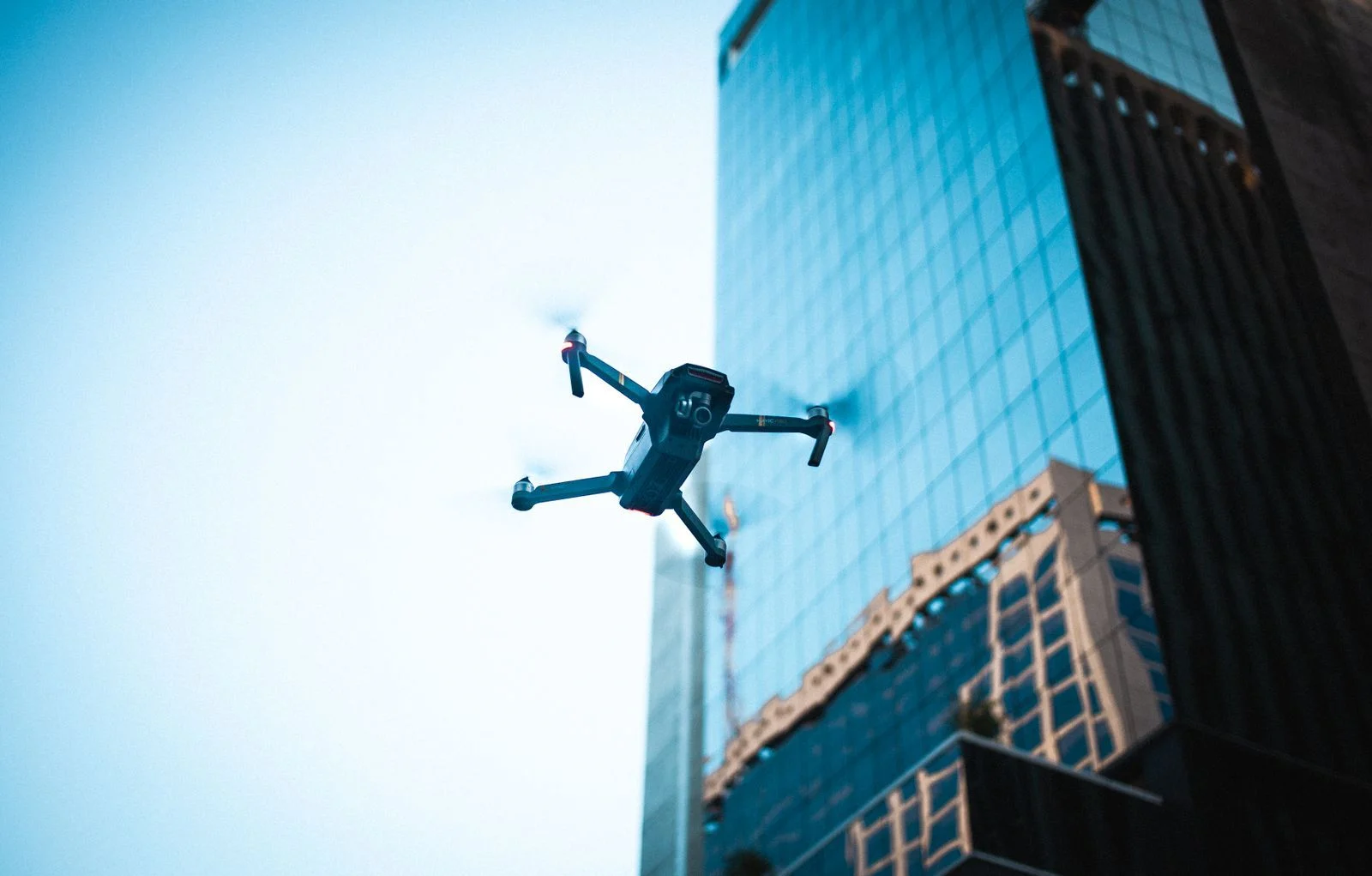
What it enables in practice: inspection of a building façade in a city street, filming on a secured set, infrastructure work inside an industrial perimeter, survey flights over an urban construction site. The pattern is always the same: you cannot keep the required Open-category distances from people, but you can control who is on the ground beneath the flight.
What it demands: a C5 class-marked aircraft, a pilot holding the STS certificate of remote pilot theoretical knowledge plus practical training, an operator declaration, an operations manual covering the scenario’s procedures, and genuine control of the ground area; tape and hope do not qualify. “Controlled” means briefed personnel, marked boundaries and someone accountable for keeping them.
STS-02: beyond visual line of sight
The mission profile: BVLOS operations up to 120 metres, over sparsely populated areas, either within limited range of the pilot or extended along the route using airspace observers, trained people positioned to monitor the air volume and alert the pilot to traffic.
What it enables in practice: linear-asset inspection (pipelines, power lines, railways) plus large-area mapping and agricultural monitoring beyond the pilot’s eyesight. This is the scenario that unlocks the missions we described in commercial drone applications at real industrial scale, where flying VLOS-leg by VLOS-leg would be hopelessly inefficient.
What it demands: a C6 class-marked aircraft, STS-certified pilot, declared operator, procedures for observer coordination and lost-link events, and disciplined communication protocols. BVLOS is unforgiving of improvisation: the paperwork exists because the pilot’s eyes are no longer the safety system; the process is.
Why clients increasingly ask for STS
Procurement departments have learned the question. “Are you certified for Specific-category operations?” now appears in tenders for inspection and survey work, because the client carries reputational and legal exposure if their contractor flies an illegal mission. An operator holding only Open-category credentials is locked out of every mission profile above, regardless of equipment quality. As we argued in our guide to starting a drone business in Greece, certification strategy is business strategy: the missions you can legally fly define the contracts you can win.
The honest caveats
STS is a doorway, not a licence to everything. The scenario conditions are strict, class-marked aircraft are a real constraint when selecting equipment, and operations that fall outside the scenario’s box still require the full SORA-based authorisation path. Requirements also evolve; regulatory watch is part of running a serious operation, not an optional extra.
Getting there
The pathway: Open-category foundations first (A1/A3, A2), then STS theoretical certification and practical training through authorized entities, then the operator-side work (declaration, operations manual, procedures) that turns a certified pilot into a contractable operation. Our drone services team runs this end to end, including training pathways via authorized partners and the operational setup, built on our own STS-01/STS-02 certification and five-plus years in the Greek drone business.
Frequently Asked Questions
What is the difference between STS-01 and STS-02?
What aircraft do the Standard Scenarios require?
Do I need a full authorisation to fly STS missions?
Why do clients ask for Specific-category certification?
Editorial note — This article was researched and drafted with the assistance of Claude (Anthropic), and reviewed and approved by Amazing Projects before publication.